
Explore the precious surviving historical buildings and archaeological sites in Changzhou, and feel the charm precipitated by time. From millennium-old ancient temples to streets and lanes of the Ming and Qing dynasties, every historical site holds the city’s past.
Tianning Temple – A Buddhist Cultural Treasure of the Millennium-Old Ancient Temple
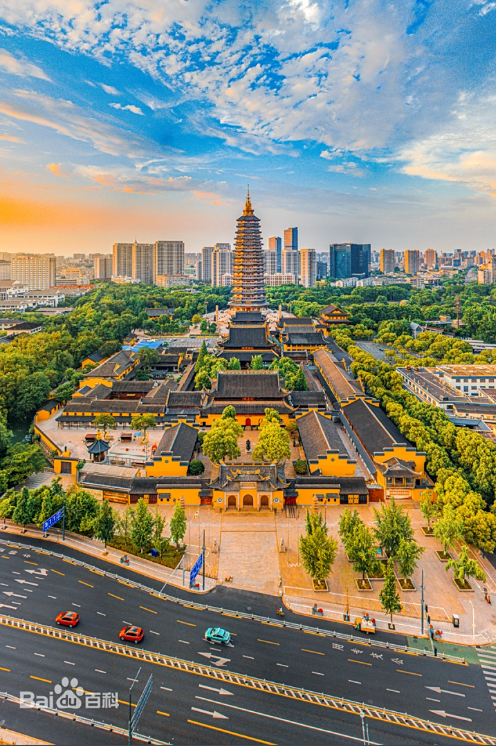
Historical Evolution
Tianning Temple was first built during the Zhenguan and Yonghui reigns of the Tang Dynasty (627-655 AD) and has a history of over 1,300 years. Known as “the Premier Buddhist Monastery in the Southeast” since ancient times, the temple experienced ups and downs through the five dynasties of Tang, Song, Yuan, Ming, and Qing. Having been destroyed by wars multiple times and then rebuilt, its existing structures were mainly constructed during the Tongzhi and Guangxu reigns of the Qing Dynasty, making it an important carrier of Buddhist culture in the Jiangnan region.
Architectural Features
- Mahavira Hall: As the main structure of Tianning Temple, Mahavira Hall boasts a width of 26 meters, a depth of 28 meters, and a height of 25 meters, with a total construction area of 1,080 square meters. Enshrining the Three Buddhas of the Three Ages, the hall exudes an air of solemnity and grandeur. Its overhanging eaves with upturned corners, carved beams, and painted rafters fully embody the magnificent momentum of Qing Dynasty architecture.
- Tianning Pagoda: Completed in 2007, the Tianning Pagoda stands at an impressive height of 153.79 meters. A pavilion-style Buddhist pagoda featuring Tang and Song Dynasty architectural styles, it comprises 13 stories. Housing a vast collection of precious Buddhist artworks, the pagoda offers a panoramic view of Changzhou when ascended. Integrating traditional craftsmanship with modern technology, it has become one of Changzhou’s iconic urban landmarks.
Cultural Value
- Buddhist Status: An important practice center of Chinese Chan Buddhism, it has exerted a profound influence on the dissemination of Buddhist culture in the Jiangnan region.
- Artistic Value: A well-preserved complex of Qing Dynasty temple buildings, integrating architecture, sculpture, and painting art.
Visiting Information
- Address: No. 636, Yanling Middle Road, Tianning District, Changzhou City
- Opening Hours: 8:00 – 17:00
- Ticket Prices: Free admission to Tianning Temple; 50 yuan per person for Tianning Pagoda
- Recommended Visiting Time: 2-3 hours
Travel Tips
- The best time to visit is in the morning, allowing you to avoid peak crowds and experience the temple’s serene atmosphere.
- There is a queue for the pagoda elevator. It is recommended to visit the pagoda during off-peak hours or choose to walk to experience the joy of climbing high.
- Free incense is provided in the temple; there is no need to bring your own. Please worship Buddha in a civilized manner.
- Nearby is the Tianning Commercial District. After your visit, you can go shopping and dine there to experience modern life in Changzhou.
Qingguo Lane – The No.1 Lane of Celebrities in the Jiangnan Region
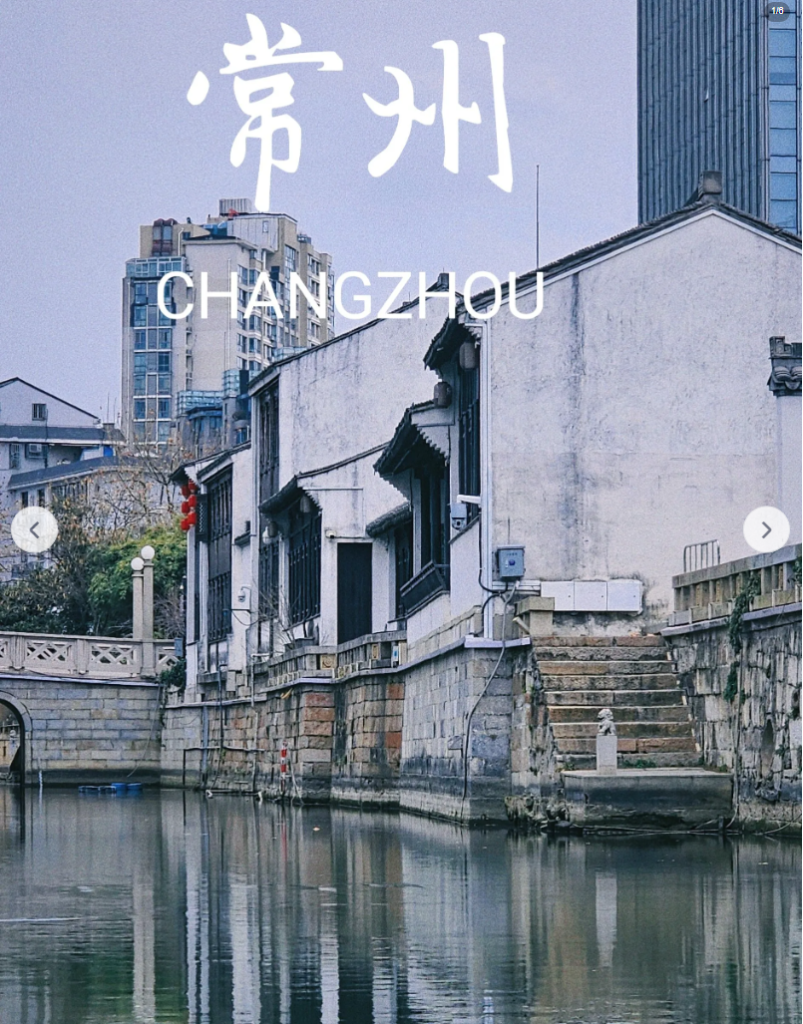
Historical Background
Qingguo Lane was first built during the Wanli reign of the Ming Dynasty (1573-1620 AD) and got its name from the numerous fruit and vegetable shops lining the lane at that time. Stretching about 500 meters long, this alley produced nearly a hundred successful candidates in the highest imperial examinations (jinshi) during the Ming and Qing dynasties, earning it the reputation of “The No.1 Lane of Celebrities in the Jiangnan Region.” It is the core area for the inheritance of Changzhou’s cultural context.
Former Residences of Celebrities
- Former Residence of Qu Qiubai: Qu Qiubai, one of the major early leaders of the Communist Party of China, was born here. A well-preserved Qing Dynasty building, the former residence is now a National Key Cultural Relic Protection Unit, showcasing Qu Qiubai’s life story and revolutionary journey.
- Former Residence of Zhao Yuanren: Zhao Yuanren, the father of modern Chinese linguistics, once resided here. The residence displays his research manuscripts, works, and daily necessities, highlighting his outstanding achievements in linguistics, music, and other fields.
- Former Residence of Zhou Youguang: Zhou Youguang, the father of Pinyin, was born here. Through pictures, texts, cultural relics, and other forms, the former residence presents his important contributions to the modernization of the Chinese language and his life attitude of being indifferent to fame and fortune.
Architectural Features
Qingguo Lane preserves a complete complex of traditional Jiangnan residences from the Ming and Qing dynasties, featuring the typical style of “blue bricks, small tiles, and horse-head walls; winding corridors, hanging flowers, and lattice windows.” The buildings in the lane are exquisitely laid out with deep courtyards, and the exquisite craftsmanship of brick carving, wood carving, and stone carving fully reflects the gentleness and elegance of the water towns in Jiangnan.
Modern Activation
In recent years, Qingguo Lane has undergone protective restoration. While maintaining its historical style, it has introduced cultural and creative stores, traditional handicraft workshops, and characteristic catering. Today, Qingguo Lane is not only a historical and cultural block but also a new landmark for cultural leisure in Changzhou, achieving a perfect integration of traditional culture and modern life.
Visiting Information
- Address: Qingguo Lane Historical and Cultural Block, Tianning District, Changzhou City
- Opening Hours: Open 24 hours a day (shops are usually open from 9:00 to 21:00)
- Ticket Price: Free
- Recommended Visiting Time: 2-3 hours
Featured Experiences
- Visit the former residences of celebrities, follow in the footsteps of the virtuous predecessors, and learn about the life stories and spiritual inheritance of Changzhou’s cultural celebrities.
- Experience the production of traditional handicrafts such as combs and fine-tooth combs, random stitch embroidery, etc., and feel the unique charm of intangible cultural heritage craftsmanship.
- Taste Changzhou’s characteristic snacks: sesame seed cakes, radish drieds, and silver thread noodles. While satisfying your taste buds, experience the local food culture.
- Take a night tour of Qingguo Lane, admire the charm of the ancient lane under the lights, and feel the romantic atmosphere of “night Jiangnan”.