
Qu Qiubai – The Illustrious Life of a Scholar-Revolutionary
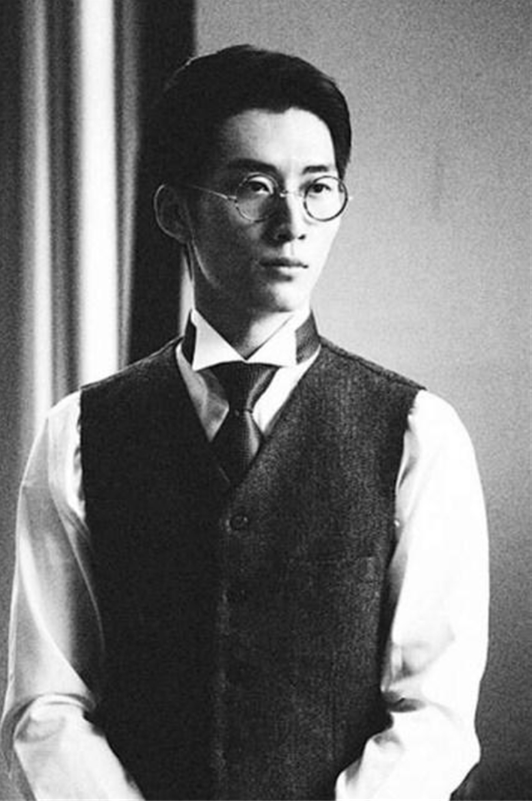
Biographical Profile
Qu Qiubai (1899-1935), originally named Qu Shuang, was a native of Changzhou, Jiangsu. As one of the early key leaders of the Communist Party of China, he was an outstanding proletarian revolutionary, theorist, and propagandist, as well as a distinguished writer and translator. His life was a relentless struggle for revolutionary ideals and a continuous exploration in the cultural field, making significant contributions to both the Chinese revolution and cultural development.
Growth Experience
- Childhood in Qingguo Lane: On January 29, 1899, Qu Qiubai was born into a declining scholar-official family at Baoguitang in Qingguo Lane, Changzhou. His father, Qu Shiwei, was skilled in painting and medicine, while his mother, Jin Hengyu, was well-versed in history. This family environment provided him with a solid cultural foundation. However, the decline of the family’s fortunes forced him to experience the hardships of life at an early age, fostering in him a resilient and tenacious character.
- Path of Learning:
- In 1917, Qu Qiubai was admitted to the Beijing Russian Language School, where he was first exposed to Marxist thought and began to engage with the fate of Chinese society.
- In 1920, he traveled to Soviet Russia as a special correspondent for Morning Post, conducting an in-depth study of the revolution and construction in Soviet Russia. He wrote numerous news dispatches to inform the Chinese people about the situation there.
- While working as a translator and teaching assistant at Moscow’s University of the Toilers of the East, he met many revolutionary comrades, which further strengthened his revolutionary convictions.
Revolutionary Career
- Early Contributions:
- In 1922, Qu Qiubai joined the Communist Party of China and subsequently engaged in the propaganda work of the Central Committee, serving as editor-in-chief of revolutionary publications such as New Youth and The Guide, actively promoting Marxism and the Party’s revolutionary principles.
- After returning to China in 1923, he participated in leading revolutionary struggles such as the May Thirtieth Movement and the Canton-Hong Kong Strike, accumulating extensive experience through revolutionary practice.
- In 1927, at the critical juncture of the failure of the Great Revolution, Qu Qiubai presided over the August 7th Meeting, which established the general policy of agrarian revolution and armed resistance against the Kuomintang reactionaries, charting a clear direction for the Chinese revolution.
- Literary Achievements: Amidst his intense revolutionary work, Qu Qiubai persisted in literary creation and translation. He translated a vast number of Soviet Russian literary works, opening a window for Chinese readers to understand world literature. He authored essay collections such as Journey to the Land of Hunger and Heart History of the Red Capital, which showcase his literary talent and revolutionary spirit through elegant writing and profound thought. Additionally, he proposed significant insights on the Latinization of Chinese, actively exploring paths toward the modernization of the language.
Heroic Martyrdom
In February 1935, Qu Qiubai was captured by the Nationalist army in Changting, Fujian. During his imprisonment, he remained steadfast and unyielding in the face of the enemy’s threats and inducements, upholding his revolutionary integrity. While in prison, he wrote Superfluous Words, which revealed the sincerity and openness of a revolutionary intellectual. On June 18, 1935, Qu Qiubai faced his execution with composure at the age of 36. Before his death, he sang The Internationale and walked calmly to the execution ground, fulfilling his revolutionary ideals with his life.
Memorial Sites
- 瞿秋白故居:
- Qu Qiubai’s Former Residence:
- Address: No. 82 Qingguo Lane, Tianning District, Changzhou
- Opening hours: 9:00
Qu Qiubai used his pen as a blade and his blood as fire, lighting a beacon for national awakening in an era of darkness and turmoil. His writings reveal an unwavering pursuit of truth, and his sacrifice embodies absolute loyalty to his beliefs. Today, his former residence in Qingguo Lane stands quietly, while the exhibits in his memorial hall speak volumes. This scholar-revolutionary from Changzhou has long become a vital symbol of the city’s spirit, inspiring future generations to hold fast to their original aspi